Posted by tzdhhg tzdhhg
4 hours ago
Filed in Other
#Vulcanizing Resin
6 views
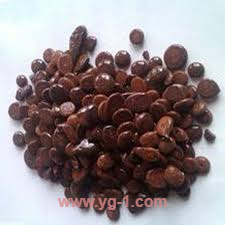
Can Vulcanizing Resin Be Used in Industrial Rubber Products?
Industrial rubber products are rarely made from raw polymer alone. Their final characteristics depend on the interaction between the rubber base, curing system, fillers, reinforcing materials, processing aids, and other formulation components. A vulcanizing resin can form part of this curing approach in selected rubber systems, particularly when the compound requires a curing method associated with heat resistance and specific physical characteristics. YG-1 and DongHai Chemical provide rubber chemical products for manufacturers working with different formulation requirements, but what should be considered before using resin based curing chemistry in an industrial rubber product?
The suitability of a resin based curing system starts with the polymer itself. Rubber materials do not all respond to curing ingredients in the same manner, so the first step is to understand the molecular structure and chemical characteristics of the selected base material. Unsaturated rubber, butyl rubber, and certain specialty polymers can have different responses when exposed to phenolic or other resin systems. The formulation therefore needs to be designed around the relationship between the polymer and curing chemistry rather than treating the resin as an isolated additive.
Heat resistance is one reason resin curing can attract attention in industrial applications. According to DongHai Chemical's industry information, alkyl phenolic resins can be used for curing unsaturated carbon chain rubber and butyl rubber, with the resulting vulcanizates showing improved heat resistance. The same source also notes that epoxy resin can provide a curing effect for carboxyl rubber and chloroprene rubber, with the cured material offering useful flex resistance.
Industrial rubber components often operate under conditions that place demands on their physical properties. A molded component may experience repeated movement, elevated temperatures, compression, contact with surrounding materials, or long periods of service. Depending on the application, manufacturers may need to balance hardness, elasticity, tensile behavior, compression characteristics, heat resistance, aging behavior, and dimensional stability. The curing system becomes one part of that wider formulation decision.
The production process also matters. Mixing temperature, dispersion, molding conditions, curing temperature, and curing time can influence the way the resin interacts with the rubber compound. A formulation intended for laboratory evaluation may therefore require additional adjustment before being transferred to continuous or large scale production. Processing equipment and compound preparation methods should be considered alongside the chemical selection.
Butyl rubber provides an interesting example because resin curing can be considered when heat resistance is an important requirement. Butyl based compounds are used in applications where low gas permeability and other material characteristics are relevant, while curing chemistry can be selected according to the required product properties. The interaction between polymer, resin, activators, and other ingredients needs to be evaluated as part of the complete formulation.
Chloroprene rubber represents another material where curing chemistry requires careful selection. Different curing approaches can affect the balance of mechanical and processing properties, and the appropriate system depends on the intended product. For manufacturers developing industrial components, the choice should be connected to the actual service conditions rather than based only on the chemical category of the curing material.
Industrial applications also vary widely in their requirements. Rubber hoses, sealing components, electrical materials, mechanical parts, vibration control products, and specialized molded articles may use different formulations even when they are all described as industrial rubber products. A resin system suitable for one component may not necessarily be appropriate for another because the polymer, operating temperature, mechanical load, and surrounding environment can all change.
The role of other ingredients should also be considered. Fillers can influence reinforcement and processing behavior, while plasticizers can affect flexibility and compound handling. Accelerators, antioxidants, processing aids, and other additives can interact with the curing system. Changing the level or type of one ingredient can therefore alter the response of the overall compound.
For manufacturers evaluating resin curing, technical information provides a useful starting point. Product descriptions can help identify chemical type, intended rubber systems, physical form, storage requirements, and potential application areas. After an initial selection, laboratory trials can be used to examine cure behavior and finished compound properties under conditions that reflect the intended production process.
Supplier capability can also be relevant when a manufacturer is developing several rubber products. DongHai Chemical's product portfolio includes vulcanizing agents, accelerators, antioxidants, antiscorching agents, adhesive agents, processing aids, crosslinking agents, tackifying resins, and vulcanizing resins. This broader range gives formulation teams access to different categories when a compound requires adjustment or when several related materials need to be assessed.
For industrial rubber manufacturers, product development often involves repeated formulation evaluation rather than choosing an ingredient from a single specification sheet. The polymer, service environment, processing equipment, target properties, and curing conditions all contribute to the final result. Resin curing can therefore be considered when its chemical characteristics match the requirements of the selected rubber system.
Manufacturers interested in the principles behind rubber curing can also refer to DongHai Chemical's technical resource, https://www.yg-1.com/, while exploring the company's range of rubber chemicals for formulation development, material comparison, and industrial rubber applications.