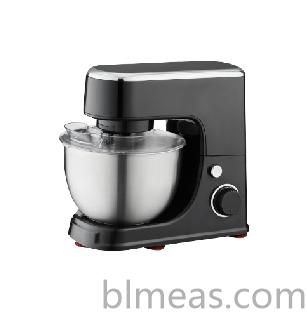
Battery-powered kitchen equipment is creating new possibilities for flexible food preparation, especially when users want to move appliances between different locations. A Cordless Kitchen Appliance with Interchangeable Battery can form part of a broader product platform in which one removable power source supports multiple compatible devices. Developing such a system requires coordination between mechanical design, electrical engineering, materials, safety, ergonomics, and manufacturing.
The battery interface is the foundation of this type of appliance. It needs to provide both secure mechanical attachment and reliable electrical contact. The connection should remain stable while the appliance is operating, yet allow the user to install and remove the battery without unnecessary effort. This requires carefully designed locking structures, contact positions, guide surfaces, and protective features.
Compatibility becomes particularly important when the same battery is intended for several appliances. A shared platform needs common mechanical and electrical principles so that the battery can work with different product bodies. At the same time, individual appliances may have different motors, operating requirements, or control systems. Engineers therefore need to design the platform around common standards while allowing sufficient flexibility for different applications.
Material selection contributes to the reliability of the battery interface. The appliance housing may use molded engineering plastics that combine structural support with efficient mass production. Internal brackets and connection structures need sufficient stability to maintain alignment. Electrical contact areas also require suitable materials and manufacturing precision because repeated insertion and removal can place additional demands on these components.
The battery position can influence ergonomics significantly. A removable battery adds weight to the appliance, so designers need to consider how that weight affects balance and handling. For handheld appliances, the location of the battery relative to the motor and grip can influence comfort. For countertop equipment, the battery position may instead affect overall stability and storage convenience.
Electrical engineering is another major consideration. The battery, motor, control board, charging system, and protective circuits must work together within the product architecture. Different appliances may have different energy requirements, making power management important when creating a shared platform. Appropriate protection and monitoring systems should be considered according to the specific product design and applicable requirements.
Safety also needs to cover both mechanical and electrical interactions. The battery should remain securely attached during normal operation, while the release mechanism should reduce the possibility of accidental removal. The appliance should also be designed to prevent unintended activation where appropriate. Electrical components need suitable insulation and protection, particularly in kitchen environments where moisture and food residues may be present.
Manufacturing precision is essential because a shared interface may be used across multiple product models. Small dimensional variations in the battery compartment or connection structure could affect compatibility. Tooling accuracy, injection-molding consistency, electrical component inspection, and assembly controls therefore become important parts of production management.
Cleaning requirements should also be considered during product development. Food-contact areas need to remain appropriately separated from battery and electrical components. Removable containers, blades, whisks, or other processing parts can make maintenance more convenient, while protected electrical sections can reduce unnecessary exposure to moisture during cleaning.
From a brand-development perspective, a common battery platform can support a wider product ecosystem. A company may develop several kitchen appliances around the same power architecture, allowing users to move a compatible battery between products. This can also create opportunities for coordinated product styling, accessories, packaging, and replacement-power solutions.
For manufacturers, however, a shared platform requires disciplined product planning. Battery compatibility, housing interfaces, electrical architecture, tooling, assembly processes, quality control, packaging, and after-sales considerations all need to be coordinated across the product family. A Cordless Kitchen Appliance with Interchangeable Battery is therefore not simply an appliance with a removable power source, but part of an integrated cordless product system. Companies exploring OEM or ODM kitchen appliance development can find additional product information at https://www.blmeas.com/ when evaluating potential manufacturing cooperation.