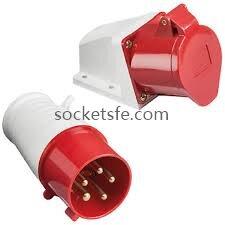
For equipment operating on a 220V supply, a 220V Industrial Plug provides a practical interface between electrical equipment and a compatible power source. Industrial applications often require more than basic electrical connectivity because plugs may be handled frequently and exposed to vibration, dust, moisture, mechanical stress, or demanding working conditions. Proper design therefore combines electrical performance with suitable materials, mechanical protection, and installation considerations.
The housing is a fundamental component of industrial plug construction. It provides physical protection for internal conductive parts and creates the external interface used during connection and handling. Engineering plastics are widely used in electrical connector housings because they can provide insulation while offering useful mechanical properties. The selected material should be appropriate for the intended environment, including expected temperature, moisture exposure, impact, and chemical contact.
Insulating components are equally important. Electrical insulation separates conductive elements and helps control the path of current within the connector. Material quality, thickness, molding precision, and assembly accuracy all influence the effectiveness of the insulation system. A well-designed plug should maintain appropriate separation between conductive components during normal use and handling.
The contact system determines how electrical current passes between the plug and the mating socket. Conductive metals are selected according to requirements such as conductivity, corrosion resistance, and mechanical endurance. Contact surfaces must be formed and positioned accurately so that the connection remains stable when the plug is fully engaged. Consistent contact pressure and proper alignment can contribute to reliable electrical continuity.
Cable termination is another important design area. The connection between the cable conductors and internal contacts needs to be mechanically secure and electrically appropriate. At the same time, the cable entry should prevent excessive bending or pulling forces from reaching the termination area. Strain-relief structures can distribute mechanical forces and help protect the internal connection during routine handling.
Mechanical locking is also relevant in industrial applications. Equipment may be subject to movement, vibration, or repeated connection cycles. A suitable locking mechanism helps maintain the mating position once the plug has been installed. The exact mechanism varies between connector designs, but the underlying objective is to prevent unintended separation during normal operating conditions.
Manufacturing consistency has a major influence on the finished connector. Plastic housings and insulation parts are often formed through precision molding processes. Dimensional control is important because the plug must fit its corresponding socket correctly. Contact positioning, shell alignment, locking components, and cable-entry structures all depend on consistent manufacturing tolerances.
Electrical testing can be incorporated into production quality control. Depending on the product design, manufacturers may inspect continuity, insulation characteristics, contact assembly, mechanical operation, and visual quality. Such testing helps identify manufacturing defects before products reach installation sites. Combining process control with inspection can improve consistency across production batches.
The application environment should always be considered when selecting an industrial plug. A workshop with relatively controlled conditions may have different requirements from a construction site, outdoor power distribution point, or production area exposed to moisture and dust. Connector selection should consider not only the nominal voltage but also current requirements, connector configuration, environmental protection, cable type, installation method, and compatibility with the mating socket.
Installation quality also affects electrical connection performance. Before installation, technicians should inspect the plug and cable for visible damage and confirm that the connector is suitable for the intended equipment. Conductors should be terminated according to the connector's design, while cable routing should avoid unnecessary tension and sharp bending. The plug should be completely inserted and secured before the equipment is energized.
Routine inspection provides another layer of practical protection. Maintenance personnel can check for damaged housings, worn contact areas, loose cable entries, contamination, or signs of overheating. If a connector has suffered physical damage or its electrical condition is uncertain, it should be evaluated and replaced when necessary rather than returned to service without inspection.
A properly engineered 220V Industrial Plug integrates electrical contacts, insulating materials, housing structures, cable management, and mechanical retention into a coordinated connection system. Understanding these elements helps equipment manufacturers, installers, and maintenance teams select connectors according to actual operating requirements rather than voltage alone. Industrial plug and socket solutions can be explored at https://www.socketsfe.com, with attention to application environment, connection structure, material selection, and installation needs.