-
How ShiJingTools Engineers a Vacuum Suction Cup for Oily and Rough Surfaces
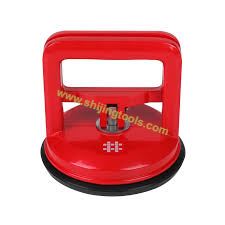
The performance of a Vacuum Suction Cup depends entirely on its ability to maintain a consistent seal against the target surface. When that surface presents oil residues, uneven textures, or both, many standard cups fail, losing grip and creating workplace hazards. The physics of vacuum attachment demand a perfect interface between the cup's lip and the material beneath. Oil acts as a lubricant, preventing the seal from forming, while rough surfaces provide pathways for air to infiltrate the vacuum chamber. These two conditions represent the most common failure points for material handling equipment across construction sites and factory floors. ShiJingTools has dedicated its engineering resources to understanding and overcoming these exact obstacles, developing Vacuum Suction Cup designs that perform reliably where others slip and release. The question facing every professional who handles heavy tiles, metal sheets, or glass panels remains straightforward: does your current equipment offer the same level of engineered security against these everyday challenges?
The primary challenge with oily surfaces involves the lubricating film that coats many metal components during manufacturing or storage. Standard rubber compounds slide across this film without achieving the friction necessary for a stable grip -1. The solution requires careful selection of materials with specific chemical resistance and surface properties -4-5. ShiJingTools incorporates high-quality Buna-N rubber into its critical sealing components, a material known for its excellent resistance to oils, fuels, and solvents -10. This compound resists degradation from contact with industrial lubricants and maintains its elasticity to form a tight seal. Beyond material selection, the surface geometry of the cup's sealing lip plays a crucial role. Grooves and contoured support surfaces facilitate the drainage of liquids, allowing the cup to establish direct contact with the base material even in the presence of oil -9-12. This design feature prevents the oil film from acting as a barrier between the rubber and the workpiece.
Rough surfaces present an entirely different mechanical challenge. The peaks and valleys of uneven stone, unfinished concrete, or textured tiles prevent a flat cup from achieving full contact. Air leaks through these microscopic channels, destroying the pressure differential that provides lifting force. Professional tools addressing this issue feature flexible sealing lips that adapt to surface irregularities -1. The sealing lip flexes to conform to the workpiece contour, filling the gaps that would otherwise allow air infiltration. ShiJingTools' engineering approach incorporates flexible sealing elements with increased stroke capacity, enabling effective sealing even on surfaces with significant texture -1. This adaptability represents a fundamental difference between consumer-grade suction devices and professional handling equipment intended for construction and industrial applications. The ability to maintain a seal against rough stone determines whether a worker can safely transport a heavy tile or glass panel across a job site.
Testing protocols distinguish truly reliable tools from those making unsubstantiated claims. Professional vacuum handling equipment undergoes rigorous validation to confirm performance under adverse conditions -3-7. ShiJingTools' heavy-duty Vacuum Suction Cup models, such as the 6100 series with a 200mm suction plate, have been developed specifically to handle challenging surfaces while providing operators with real-time performance feedback -6. The incorporation of digital displays showing suction force in kilograms allows workers to verify adequate grip before attempting to lift heavy materials. This safety feature proves particularly valuable when working with unfamiliar surfaces or when conditions vary across a job site. An automatic safety mechanism reduces suction power if it exceeds the operational limit, preventing over-exertion and maintaining control -6. These intelligent features transform the Vacuum Suction Cup from a simple mechanical device into a reliable partner for demanding professional tasks.
The consequences of suction cup failure extend beyond dropped materials. Physical injuries to workers, damage to expensive materials like marble or large-format tiles, and project delays represent significant costs that far outweigh the initial equipment investment -6. Professionals handling materials weighing hundreds of kilograms require absolute confidence in their lifting tools -2-6. This confidence cannot arise from optimistic marketing language; it must be earned through demonstrated performance and robust engineering. ShiJingTools has built its reputation on solving the practical problems faced by masons and construction workers daily, earning a substantial following across China through its commitment to functional improvement -2. The company's Vacuum Suction Cup range reflects this philosophy, delivering holding forces capable of vertically lifting up to 260 kg and laterally pulling up to 240 kg on appropriate surfaces -6.
Real-world application demands versatility beyond test conditions. Construction sites and factories present varying combinations of oil, dust, moisture, and surface texture. A tool must accommodate these variables without requiring constant adjustment or cleaning. The materials used in professional suction cups must resist wear from abrasive surfaces and degradation from environmental exposure. ShiJingTools selects materials balancing these requirements, with working life extending up to 2 years under normal professional use -10. This durability translates into predictable performance and predictable replacement costs, essential factors for professionals who depend on their tools daily. The inclusion of features like Type-C charging ports and long-lasting lithium batteries further enhances practicality by reducing downtime and simplifying maintenance -2-6. These considerations demonstrate that robust performance on challenging surfaces requires comprehensive engineering attention, not merely a surface-level adaptation.
The engineering knowledge gained from addressing oily and rough surfaces informs broader improvements in suction cup technology. Innovations developed to solve these difficult applications frequently benefit standard applications as well -7-8. Sealing designs that work on rough stone perform flawlessly on smooth materials. Materials that resist oil degradation provide extended service life across all applications. Digital monitoring systems developed for safety on challenging lifts improve operator confidence in all conditions. ShiJingTools continuously develops new products based on direct user feedback and communication, ensuring that each generation addresses the difficulties encountered during actual construction -6-10. This user-centric development cycle yields vacuum handling tools that meet the real demands of the industry, not idealized specifications. The specific capabilities and engineering details available for the 200mm Vacuum Suction Cups and other models can be explored through the comprehensive product information at https://www.shijingtools.com/, which provides the technical documentation necessary for informed equipment selection. Professionals seeking reliable handling solutions for oily or rough surfaces deserve tools specifically engineered for those conditions rather than generic products applied to demanding tasks. ShiJingTools has established its reputation by providing exactly this level of specialized engineering, and the question remains whether any professional handling heavy materials can afford to trust their safety and productivity to anything less.