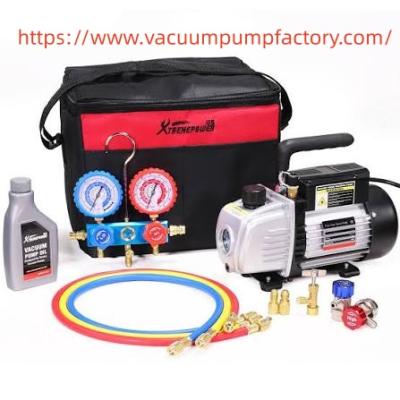
HVAC Vacuum Pump Manifold Gauge Kit Supplier selection deserves careful consideration when you are sourcing equipment for HVAC service, refrigeration maintenance, distribution, or private-label sales. A suitable supplier should be evaluated according to product specifications, application requirements, refrigerant compatibility, connection standards, customization options, and production arrangements. For importers and distributors, the goal is not simply to purchase a product, but to build a product combination that matches the needs of their customers and market.
Start With Your Target Market
Before contacting a supplier, think about where and how the equipment will be used.
Residential air conditioning, commercial refrigeration, automotive air conditioning, and HVAC maintenance can involve different service requirements. Your customers may also have different preferences regarding pump capacity, gauge configuration, hose length, connections, and accessories.
Having a clear target market makes it easier to discuss product requirements with a manufacturer.
Check The Vacuum Pump Specifications
Vacuum pump specifications should be one of the first areas to review.
Depending on the intended application, buyers may compare pumping capacity, vacuum performance, motor power, oil capacity, inlet size, and single-stage or dual-stage construction.
A distributor supplying technicians who regularly perform evacuation work may have different requirements from a retailer serving occasional users.
Instead of selecting a configuration based only on appearance, compare the technical specifications with the working conditions of the intended users.
Review The Manifold Configuration
The manifold gauge section also deserves attention.
Buyers can compare two-valve and four-valve configurations, gauge ranges, display formats, connection sizes, valve arrangements, and hose options.
The preferred configuration can depend on the type of service work performed by the technician.
Charging, pressure checking, evacuation, and recovery may require different workflows. Understanding these procedures can help buyers select equipment that makes sense for their customers.
Which Refrigerants Are Supported?
Refrigerant compatibility should be confirmed before placing an order.
Different HVAC systems may use different refrigerants, including R-410A, R-32, R-454B, and other refrigerant types. Newer equipment can also bring additional service considerations.
Buyers should review the manufacturer's specifications and confirm whether the selected configuration is intended for the refrigerants used in their market.
This is particularly useful for distributors who plan to serve several categories of HVAC equipment.
Check Connection Standards
A product can have suitable specifications but still create problems if the connections do not match existing equipment.
Check thread sizes, hose connections, fittings, service ports, and available adapters.
If your customers already use particular connection standards, matching those standards can make the equipment easier to integrate into their existing service kits.
It is better to confirm connection details before ordering than to discover a mismatch after the products arrive.
Ask About Hose Options
Hose length and connection type can affect how technicians position their equipment during service.
Some applications may benefit from compact hoses, while other working environments may require additional reach.
Buyers can review hose length, material, fitting type, pressure specifications, and connection standards.
If several hose configurations are available, consider which combinations are most suitable for the market you are serving.
Consider A2L Applications
A2L refrigerants have become an important consideration for HVAC professionals working with newer systems.
R-32 and R-454B are examples of refrigerants that require appropriate equipment and service procedures.
When sourcing equipment for these applications, buyers should review the manufacturer's compatibility information and applicable requirements.
This can be particularly relevant for distributors preparing their product range for newer HVAC equipment.
What Customization Is Available?
Customization can be useful for importers, distributors, and private-label brands.
Depending on the product and order requirements, buyers may discuss logo placement, packaging, labels, manuals, product configurations, and other branding details.
Not every product will have the same customization possibilities, so it is useful to discuss the requirements with the manufacturer before production.
Clear specifications can help reduce misunderstandings during the order process.
Review Production Requirements
For larger orders, production arrangements can be just as important as the product itself.
Ask about minimum order quantities, production schedules, packaging requirements, inspection procedures, and shipping preparation.
If the same product will be reordered regularly, consistent specifications can help distributors manage their inventory more efficiently.
Any changes to the product or packaging should also be discussed before production begins.
How Does The Supplier Handle Quality Control?
Quality control procedures are worth reviewing when comparing manufacturers.
Depending on the product, inspection may include electrical components, pump operation, gauge readings, connections, appearance, accessories, and packaging.
Buyers can ask which specifications are checked during production and before shipment.
Having clear inspection requirements can also make communication easier when buyers have specific technical or packaging expectations.
Check Technical Communication
Good communication is especially important when purchasing technical equipment internationally.
A buyer may need to ask about vacuum performance, pump capacity, refrigerant compatibility, gauge configuration, connection standards, accessories, or operating requirements.
The supplier should be able to communicate specifications clearly and respond to product-related questions.
For OEM projects, communication becomes even more important because product specifications, packaging, labels, and documentation may all need coordination.
Think About Packaging And Transportation
Packaging should not be treated as an afterthought.
Vacuum pumps and HVAC service equipment may need suitable protection during transportation and storage. Buyers can discuss individual packaging, outer cartons, protective materials, product labels, manuals, and customized packaging.
For distributors, packaging can also influence warehouse organization and retail presentation.
International buyers should consider the complete logistics process when discussing packaging requirements.
Compare More Than Product Price
Price is naturally important in B2B purchasing, but it should be considered alongside other factors.
Buyers can compare product specifications, customization, production arrangements, quality procedures, packaging, technical communication, and order flexibility.
A supplier that fits your purchasing requirements may be easier to work with over repeated orders.
The objective is to create a sourcing arrangement that works for both the buyer and the end customer.
Build A Simple Supplier Checklist
Before making a purchasing decision, review these points:
Vacuum pump specifications
Pump capacity
Vacuum performance
Manifold configuration
Gauge range
Refrigerant compatibility
Hose connections
Thread standards
Pressure specifications
A2L application requirements
Available accessories
OEM options
Packaging
Minimum order quantity
Production schedule
Quality inspection
Technical documentation
Shipping preparation
This checklist gives buyers a practical framework for comparing different suppliers.
Think About Your Customers First
A good sourcing decision starts with the people who will actually use the equipment.
If your customers mainly work on residential HVAC systems, their requirements may differ from commercial refrigeration technicians. If you sell through distribution channels, packaging, product configuration, and documentation may become more important.
Understanding these differences allows you to communicate more precise requirements to the manufacturer.
A Practical Approach To Supplier Selection
Choosing an HVAC equipment supplier does not need to rely on one factor.
Start by identifying your target market and service applications. Then compare pump specifications, manifold configurations, refrigerant compatibility, connection standards, hose options, customization, packaging, production arrangements, and quality procedures.
For distributors, importers, contractors, and private-label brands, this approach can make the purchasing process more organized and help create equipment combinations that correspond with actual market requirements.https://www.vacuumpumpfactory.com/