-
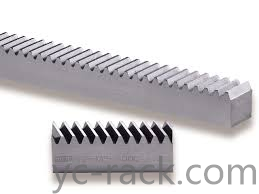
Industrial automation increasingly depends on mechanical transmission components capable of maintaining accurate linear movement, stable engagement, and reliable performance throughout continuous production. In robotics, CNC equipment, automated assembly machinery, and intelligent manufacturing systems, Ground Gear Rack technology provides a precision-oriented approach that combines refined working surfaces, controlled material processing, and carefully managed manufacturing methods.
Material engineering forms the foundation of transmission reliability. Components used in industrial equipment are exposed to repeated contact, friction, vibration, and mechanical stress. Alloy materials are often selected because they provide a useful balance of strength, toughness, and wear resistance. Through appropriate material preparation and heat treatment, manufacturers can improve structural stability while maintaining the properties necessary for subsequent machining and precision finishing.
Material consistency is particularly important when components require accurate working geometry. Variations in material behavior can influence machining efficiency and surface quality. Professional manufacturing therefore requires careful control from raw material preparation through heat treatment and final processing. Consistent material characteristics provide a reliable basis for achieving predictable mechanical performance after assembly.
Precision machining establishes the functional geometry required for effective transmission. Modern production technologies allow manufacturers to control tooth formation, alignment, and dimensional consistency throughout the manufacturing process. Subsequent grinding and finishing refine the working surfaces, improving the quality of contact between interacting components and supporting smoother mechanical movement.
Surface engineering has a direct relationship with friction and wear. A carefully processed working surface creates more consistent contact conditions and supports effective lubrication. Reduced surface irregularity helps limit unnecessary mechanical resistance and localized wear. For automated machinery performing repeated movements, this consistency can contribute to more predictable operation and improved long-term reliability.
Structural optimization is another important aspect of transmission engineering. Engineers evaluate tooth geometry, alignment, contact patterns, and force distribution to create balanced mechanical interaction. Proper force distribution helps reduce localized stress while allowing movement to remain smooth and controlled. It also minimizes unnecessary mechanical loading on surrounding machine assemblies.
Thermal behavior must be considered when transmission components operate continuously. Mechanical contact generates heat through friction, while temperature changes can influence material behavior and dimensional stability. Engineers address these effects through suitable material selection, lubrication strategies, precision processing, and manufacturing control. Maintaining stable thermal conditions helps preserve contact quality as operating environments change.
Vibration control is closely connected with manufacturing accuracy. Inconsistent surfaces or irregular engagement can create unwanted mechanical oscillation. Precision machining and controlled finishing help establish more uniform contact, reducing mechanical impact during movement. Lower vibration can protect connected components and contribute to a more stable operating environment for automated production equipment.
Digital engineering technologies provide additional opportunities for improving transmission development. Simulation tools allow engineers to evaluate structural behavior, contact conditions, force distribution, and movement characteristics before physical production. This approach supports earlier identification of potential design challenges and enables more efficient optimization of manufacturing processes.
Zhejiang Yuchen Transmission Technology Co., Ltd. combines engineering expertise with precision manufacturing capabilities to support industrial automation and advanced mechanical equipment. The company focuses on material selection, machining control, surface processing, and continuous process improvement to develop transmission components suited to manufacturers requiring stable movement and dependable mechanical performance.
As intelligent manufacturing continues to evolve, accurate linear transmission remains an essential part of efficient automated equipment. The second appearance of Ground Gear Rack emphasizes its role in controlled linear movement, balanced force transfer, and reliable mechanical operation. For further technical information and product solutions from Zhejiang Yuchen Transmission Technology Co., Ltd., visit https://www.yc-rack.com/product/spur-gear-rack/ to explore precision transmission technologies developed for modern industrial applications.