Sudoku: Discover the Ultimate Number Puzzle to Sharpen Your Mind
Posted by Allen Wright
Filed in Arts & Culture 1 view
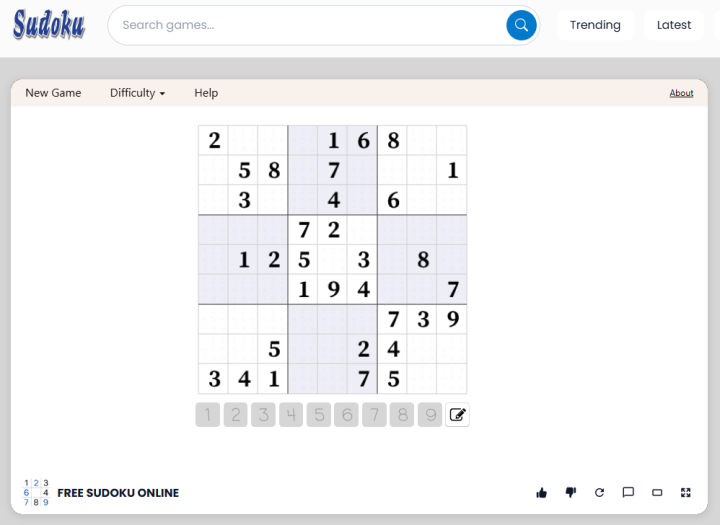
Sudoku is one of the most popular number puzzles in the world, attracting players who enjoy logical thinking, problem-solving, and mental challenges. With simple rules and countless possible puzzles, Sudoku offers an entertaining experience for beginners and experienced players alike. Whether you want to relax during a short break or challenge your brain with a difficult grid, this game provides an enjoyable way to develop concentration and logical reasoning.
Unlike traditional games that depend on luck or quick reactions, Sudoku focuses entirely on logic. Every number must follow specific rules, and each decision can help reveal the solution. This combination of simplicity and challenge makes Sudoku an excellent choice for anyone who enjoys thoughtful entertainment.
What Is Sudoku?
Sudoku is a logic-based number puzzle played on a 9x9 grid divided into nine smaller 3x3 boxes. The main objective is to fill every empty cell with a number from 1 to 9 while following three essential rules.
Each horizontal row must contain all nine numbers without repetition. Every vertical column must also include numbers from 1 to 9 exactly once. Additionally, each 3x3 box must contain all nine numbers without repeating any digit.
Although the game uses numbers, mathematical calculations are not required. Players only need observation, deduction, and logical thinking to complete each puzzle.
A Simple Concept With Endless Challenges
The basic rules of Sudoku are easy to understand, but solving a complete puzzle can require considerable patience. Every grid begins with several numbers already provided as clues. These clues create the foundation for discovering the missing values.
As players fill empty cells, new possibilities become available. A number placed in one position can help eliminate incorrect choices in nearby rows, columns, and boxes.
This simple mechanic creates a satisfying experience because every correct discovery brings players closer to completing the grid.
Why Sudoku Is So Popular
Sudoku has remained popular because it combines accessibility with intellectual challenges. Anyone can learn the basic rules within minutes, but mastering advanced solving techniques takes practice.
Another reason for its popularity is flexibility. Players can enjoy a quick puzzle during a break or spend more time solving a complicated grid. Sudoku is available in newspapers, puzzle books, mobile applications, and online platforms.
Suitable for Different Skill Levels
One important feature of Sudoku is the variety of difficulty levels. Easy puzzles introduce beginners to basic number placement and simple elimination techniques.
Medium puzzles require more careful observation because fewer obvious numbers are available. Hard and expert puzzles introduce complex situations that demand advanced logical strategies.
This progression allows players to improve gradually without feeling overwhelmed by difficult challenges.
An Enjoyable Way to Practice Logical Thinking
Sudoku encourages players to examine information, compare possibilities, and make decisions based on evidence. Instead of randomly entering numbers, successful players carefully evaluate each empty cell.
Regular practice can help develop useful habits such as patience, concentration, and systematic problem-solving. These skills can also be valuable when approaching everyday challenges that require careful reasoning.
How to Play Sudoku Effectively
Learning how to approach a Sudoku grid is essential for solving puzzles efficiently. Beginners should start by examining the existing numbers and identifying rows, columns, or boxes with several completed cells.
The goal is to find positions where only one number can fit according to the rules.
Start With the Easiest Opportunities
A good strategy is to search for rows, columns, and 3x3 boxes that already contain many numbers. These areas often have fewer missing digits, making potential answers easier to identify.
Players should also examine empty cells individually. By checking the numbers already present in the same row, column, and box, they can eliminate impossible choices.
Use the Process of Elimination
Elimination is one of the most important techniques in Sudoku. When a particular number already appears in a related row, column, or box, that number cannot be placed in another cell within the same area.
Repeating this process gradually reduces the available possibilities. Eventually, some cells will have only one valid number remaining.
Keep Track of Possible Numbers
For more difficult puzzles, players can use small notes to record potential numbers in empty cells. These notes make complicated grids easier to understand and reduce the chance of forgetting useful possibilities.
However, players should update their notes whenever a new number is confirmed. Keeping accurate candidates helps prevent confusion during advanced solving situations.
Popular Sudoku Strategies for Better Results
As players gain experience, basic number scanning may not be enough to solve challenging grids. Learning additional techniques can make the process more efficient.
Naked Singles and Hidden Singles
A naked single occurs when an empty cell has only one possible candidate. Since no other number can fit in that position, the answer is immediately clear.
A hidden single happens when a particular number can appear in only one cell within a row, column, or 3x3 box, even if that cell contains several possible candidates.
Both techniques are essential foundations for more advanced Sudoku solving.
Use Pairs to Eliminate Possibilities
Naked pairs occur when two cells in the same unit contain exactly the same two candidates. Because those two numbers must occupy those cells, they can be removed from the candidate lists of other cells in that unit.
This technique helps simplify complicated sections of a puzzle and can reveal additional solutions.
Avoid Random Guessing
Guessing can create mistakes that become difficult to identify later. A better approach is to rely on logical deductions and verify every confirmed number against the three Sudoku rules.
Careful reasoning makes the solving process more reliable and helps players understand why each answer is correct.
The Benefits of Playing Sudoku
Sudoku provides more than simple entertainment. Its structure encourages players to concentrate on a specific task while examining different possibilities.
Improve Concentration and Patience
Completing a challenging puzzle requires sustained attention. Players must remember existing numbers, evaluate possible placements, and avoid overlooking important details.
The process also teaches patience because some puzzles cannot be solved immediately. Taking time to examine the grid carefully often produces better results than rushing.
Develop Problem-Solving Habits
Sudoku encourages a structured approach to problems. Players identify available information, eliminate incorrect options, and gradually reach a solution.
This logical process can make the game a useful mental activity for people who enjoy intellectual challenges.
Enjoy Relaxing Entertainment
Many players appreciate Sudoku because it offers a quiet activity without complicated controls or competitive pressure. Focusing on a puzzle can provide a refreshing break from everyday routines.
The satisfaction of completing a difficult grid also creates a rewarding sense of achievement.
Enjoy Sudoku Online Anytime
Online Sudoku makes the classic puzzle more accessible than ever. Players can open a website or application and begin solving puzzles without preparing physical materials.
Many digital versions provide helpful features such as automatic error checking, number notes, difficulty selection, and progress tracking.
Choose a Difficulty That Matches Your Skills
Beginners should select easy puzzles to understand number placement and elimination. Intermediate players can gradually explore medium challenges, while experienced players may prefer hard or expert grids.
Choosing an appropriate difficulty makes each session enjoyable while providing opportunities for improvement.
Practice Regularly to Build Confidence
Consistent practice is one of the best ways to become better at Sudoku. Solving puzzles regularly helps players recognize familiar patterns and apply useful strategies more naturally.
Instead of focusing only on speed, players should prioritize accuracy and logical understanding. Faster solving often develops naturally as experience increases.
Conclusion
Sudoku is a timeless number puzzle that combines simple rules with rewarding intellectual challenges. Its accessible gameplay, multiple difficulty levels, and variety of solving techniques make it suitable for players with different experience levels.
From improving concentration to encouraging logical reasoning, Sudoku offers an enjoyable way to challenge the mind. Whether you are discovering the game for the first time or searching for a difficult expert puzzle, every completed grid provides a satisfying achievement.
Start playing Sudoku today, explore different strategies, and enjoy the challenge of turning an empty grid into a perfectly completed puzzle.