Can CenWan Folding and Gluing Machine Handle Varied Box Formats
Posted by cenwan cenwan
Filed in Other 1 view
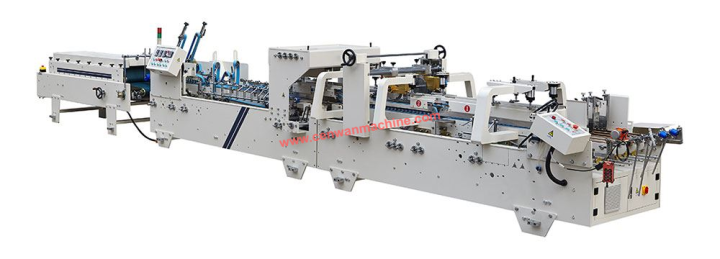
Packaging lines that produce several carton formats in a single shift often face the question of whether one machine can move from one style to another without lengthy reconfiguration. The issue centers on the time and skill required to realign belts, guides, and glue systems when the blank size or fold sequence changes. In this environment a Folding and Gluing Machine such as cenwanmachine approaches the challenge through adjustable components and stored settings that keep the transition brief while protecting fold accuracy and adhesive placement. Does the equipment actually sustain clean results once the new style begins running at production speed?
Flexibility begins with the blank feeding and alignment section. Side guides and transport belts that move laterally on precision slides allow operators to match the new blank width without dismantling major assemblies. Once the blank enters the fold stations, independently adjustable plow folders and back-fold hooks can be repositioned along calibrated scales so that the crease lines meet the required geometry for the incoming style. These movements rely on locked references rather than trial-and-error, reducing the chance of skewed panels or incomplete folds.
Glue application follows the same principle of controlled variability. Nozzle bars or wheel applicators mounted on traversable carriages shift to the correct panel edge, and volume controls respond to stored recipes so that the adhesive bead remains uniform regardless of the carton footprint. When the style calls for multiple glue lines or intermittent patterns, the system activates only the necessary outlets, avoiding excess that could transfer to rollers or create weak bonds.
The delivery and compression section completes the adaptable sequence. Stacking or shingling mechanisms that accept different finished heights and lengths keep the outflow organized, while compression belts maintain even pressure across the newly glued seams. Because each zone retains its own reference points, the entire line returns to a known state after the change, limiting the scrap that often accompanies a cold start on an unfamiliar format.
Operator interaction remains straightforward when the interface presents clear diagrams and previous job data. Recalling a stored style loads the principal positions automatically, after which only fine verification is required. This approach shortens the interval between the last good carton of one run and the first acceptable carton of the next, preserving overall equipment effectiveness across mixed-order schedules.
Long-term consistency depends on the mechanical rigidity of the adjustable elements. Slides and locks that resist vibration keep the set positions stable once production resumes, so the fold and glue quality does not drift as the shift progresses. Surfaces that contact the blank are chosen for low wear, ensuring that dimensional references remain reliable through repeated style changes.
Selection of such equipment therefore rests on documented changeover sequences, positional repeatability, and glue-pattern flexibility rather than on single-style speed alone. Builders who supply measured data on adjustment ranges and recovery times give production teams concrete grounds for planning multi-format work. A layout that keeps critical controls accessible further reduces the physical effort and potential for error during each transition.
Facilities that must answer varied order demands without dedicating separate lines find the required adaptability attainable when modular positioning and recipe storage receive equal emphasis in the machine architecture, and a Folding and Gluing Machine such as cenwanmachine provides the framework that supports this capability while the range of available configurations can be reviewed at https://www.cenwanmachine.com/ for technical outlines and application notes