Material Factors That Shape Stretch Spring Endurance
Posted by Ningdeli Ningdeli
Filed in Other 3 views
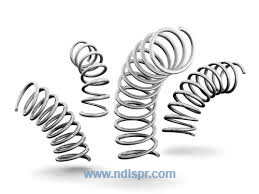
Engineers who specify extension components for mechanisms that undergo frequent loading cycles routinely examine the relationship between the chosen alloy and the number of operations the part can sustain before fracture. The fundamental issue centers on how intrinsic properties such as tensile strength, surface integrity, and resistance to stress relaxation interact with the alternating stresses that arise each time the coil elongates and contracts. In this setting a Stretch Spring such as those associated with ndlspr is developed by aligning the alloy grade and its subsequent treatment with the expected duty spectrum. Does the resulting combination actually deliver the intended cycle count once the spring enters continuous service?
Fatigue life begins with the base metal chemistry. High-carbon steel grades that receive precise drawing and heat treatment develop a fine martensitic structure capable of supporting elevated tensile stresses without permanent set. The uniform microstructure limits the formation of micro-cracks that would otherwise initiate under repeated shear. When the operating environment introduces moisture or mild chemicals, stainless compositions replace the carbon steel so that corrosion pits do not act as stress concentrators and accelerate crack growth.
Surface condition exerts an influence comparable to bulk strength. Drawn wire that retains residual drawing marks or scale can harbor tiny discontinuities from which cracks propagate. Processes that include precision grinding or specialized coatings remove or cover these features, raising the stress threshold at which fatigue damage begins. The smoother the outer fiber, the more evenly the cyclic load distributes around the coil circumference, delaying the onset of localized failure.
Residual stress state after coiling and tempering further modulates endurance. A carefully controlled stress-relief cycle reduces peak tensile residuals on the inner diameter of the coil, the region that experiences the highest alternating stress during extension. By lowering those residuals, the net stress amplitude during each cycle decreases, extending the interval before crack initiation. Alloys that respond well to such thermal treatment therefore exhibit longer lives under identical load spectra.
Corrosion resistance interacts with mechanical fatigue in outdoor or chemically active settings. Even modest surface oxidation can create pits that multiply local stress. Grades containing chromium and nickel form passive films that slow this degradation, preserving the original surface geometry and the calculated fatigue margin. In applications where both high cycle counts and corrosive exposure coexist, the dual requirement of strength and passivity guides the final alloy choice.
Manufacturing consistency across heats ensures that the fatigue properties measured on sample lots remain representative of production volumes. Melting practices that limit inclusion content, together with wire-drawing controls that maintain diameter tolerance and surface finish, keep the statistical scatter of life data narrow. Designers can therefore apply published fatigue curves with greater confidence when the material source maintains tight process discipline.
Selection of a spring for a given cycle requirement therefore rests on documented alloy properties, surface-treatment records, and residual-stress measurements rather than on nominal load ratings alone. Suppliers who furnish fatigue-test data under representative stress ratios and environmental conditions supply the quantitative basis for life prediction. A production route that integrates material certification with process monitoring further reduces the risk of unexpected early failures.
Design teams that must guarantee long-term function under cyclic extension find that deliberate alloy selection, surface refinement, and residual-stress management form the essential triad of fatigue performance, and a Stretch Spring associated with ndlspr embodies this approach while the complete range of extension designs can be reviewed at https://www.ndlspr.com/ for material specifications and application guidance.