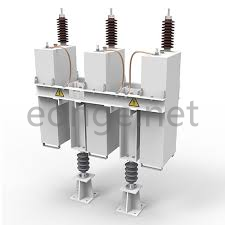
Electrical networks supporting industrial production frequently contain motors, transformers, compressors, pumps, and other equipment that requires reactive power for operation. Although reactive power is a normal part of alternating-current systems, its management can influence current loading, voltage conditions, equipment utilization, and overall network performance. A Reactive Power Compensation Device can be integrated into an appropriate electrical system to help manage reactive demand through coordinated components, control methods, and protection strategies.
Effective compensation begins with understanding the actual electrical load. Industrial processes rarely operate at a single fixed demand level. Motors may start and stop throughout the day, production lines can change operating states, and auxiliary equipment may introduce additional electrical demand. Engineers should therefore evaluate load patterns, operating schedules, transformer conditions, and network characteristics before developing a compensation strategy.
Capacitive technology is frequently used in reactive energy management because capacitive effects can counteract part of the reactive demand associated with inductive loads. The construction of capacitor components involves dielectric films, conductive materials, insulation structures, terminals, and protective elements. Consistent material handling and controlled manufacturing processes help maintain predictable electrical characteristics across finished components.
Automatic control becomes valuable when reactive demand changes significantly. A compensation controller can monitor relevant electrical conditions and coordinate different stages according to system requirements. Rather than keeping all stages permanently connected, the system can adjust the compensation level as electrical demand changes. Appropriate switching equipment is essential because repeated energization and disconnection can create electrical stresses that need to be considered during system design.
Harmonic conditions are another important engineering consideration. Industrial facilities increasingly use variable-frequency drives, rectifiers, converters, and other nonlinear electrical equipment. Such loads can introduce harmonic currents that interact with capacitive components. Before compensation equipment is integrated, engineers should examine the harmonic environment and consider whether additional measures are necessary to maintain appropriate system behavior.
Thermal conditions should also be evaluated. Compensation equipment installed inside electrical cabinets may be exposed to heat generated by nearby conductors, switching devices, transformers, and other components. Poor ventilation or excessive ambient temperature can increase thermal stress and accelerate component aging. Cabinet layout, airflow, spacing, and environmental conditions should therefore be included in the system design process.
Protection and isolation arrangements provide another layer of operational control. Compensation equipment should have suitable protection against abnormal electrical conditions, while the overall arrangement should coordinate with upstream distribution equipment. Maintenance personnel also need clear procedures for isolating equipment before inspection. Because capacitor-based components can retain stored electrical energy, appropriate discharge and verification procedures are particularly important.
Mechanical and electrical installation quality can influence long-term performance. Terminals should be assembled correctly, conductors should be routed without unnecessary mechanical stress, and equipment should be positioned so that technicians can access relevant components during inspection. Clear identification of circuits and compensation stages can make troubleshooting more efficient and reduce the possibility of incorrect maintenance operations.
A structured maintenance program can help identify changes before they become major operational issues. Inspection activities may include checking terminals, ventilation paths, switching components, enclosures, and visible signs of deterioration. Temperature changes, unusual noise, physical deformation, contamination, or repeated protective actions may justify additional diagnostic work. Maintaining historical service records can also help technicians compare current conditions with previous observations.
When load characteristics, switching, harmonic conditions, thermal management, protection, and maintenance are considered together, a Reactive Power Compensation Device can become part of a coordinated approach to electrical network management. Organizations seeking electrical components and power-system technologies can review related solutions from Shanghai Yongjin Electric Technology Co.,Ltd. through https://www.eonge.net/product.