Ilkal Saree Colours: How to Choose a Shade That Complements Your Style
Posted by Shewta Singh
Filed in Shopping 43 views
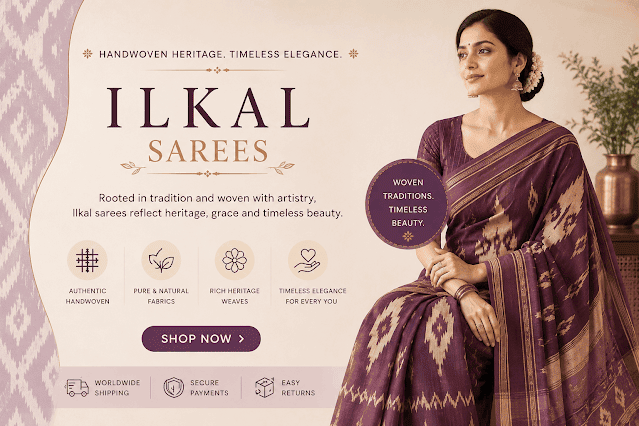
The best Ilkal saree colours for you depend on three things: your skin undertone, the occasion you are dressing for, and how much contrast you want between the body, border, and pallu. Get those three right and almost any shade, from a deep maroon to a soft pastel, will look intentional. Because an Ilkal saree is known for its contrasting borders and pallu, colour decisions matter more here than on a plain-weave saree. Below is a practical way to choose.
Which Ilkal Saree Colours Are Most Popular, and When Do They Work?
Most colour choices fall into five families.
| Colour Family | Mood | Works Best For |
|---|---|---|
| Deep red, maroon | Traditional, festive | Temple visits, festivals, weddings |
| Green, bottle green | Fresh, classic | Daytime functions, festive wear |
| Purple, wine, magenta | Rich, bold | Evening events, celebrations |
| Navy, teal, mustard | Modern, versatile | Office, gatherings, travel |
| Pastels, neutrals, off-white | Soft, understated | Daily wear, summer, casual events |
Deep, saturated shades carry the traditional look most strongly, while pastels and neutrals suit buyers who want an everyday saree that does not feel heavy. If you are buying your first one, a mid-tone shade such as teal, mustard, or bottle green offers the widest range of occasions.
How Do You Choose Ilkal Saree Colours for Your Skin Tone?
Start with your undertone, then pick shades that either match it or contrast cleanly.
- Warm undertone (golden or peachy skin, veins that look greenish): Mustard, rust, olive, maroon, and warm greens usually flatter.
- Cool undertone (pink or bluish skin, veins that look bluish): Purple, wine, navy, teal, and cool pinks tend to look best.
- Neutral undertone: Most shades work, so choose by occasion rather than skin tone.
Treat these as starting points, not rules. Lighting, your hair colour, and the blouse all change how a shade reads. When unsure, hold the saree near your face in daylight and see whether your skin looks bright or tired against it.
How Does Body, Border, and Pallu Contrast Change the Look?
An Ilkal saree typically pairs a plain or simply patterned body with a contrasting border and pallu, so the colour relationship is part of the design.
- High contrast (for example, a green body with a deep red pallu): Bold and traditional, and it photographs well.
- Tonal contrast (a lighter and darker shade of one colour): Softer and more elegant, suited to daytime and office wear.
- Low contrast (similar shades throughout): Quiet and minimal, easy to accessorise.
If you already own a lot of plain blouses in dark colours, a high-contrast saree gives you more combinations. If you prefer a calm look, choose tonal contrast and let the weave texture do the talking.
Which Colour Suits Which Occasion?
| Occasion | Suggested Shades | Contrast Level |
|---|---|---|
| Daily wear / casual | Pastels, off-white, soft green | Low to tonal |
| Office | Navy, teal, mustard, muted maroon | Tonal |
| Festivals and puja | Red, maroon, bottle green | High |
| Weddings (as a guest) | Wine, purple, deep green | Medium to high |
| Summer outings | Light neutrals, soft yellow | Low |
For heat and humidity, lighter shades also feel cooler and show sweat less visibly than very dark or very bright colours.
How Do You Match a Blouse With Ilkal Saree Colours?
Use one of these three approaches:
- Match the pallu colour: The safest option; it makes the pallu and blouse look like one unit.
- Match the border colour: Creates a framed look, especially with a thin border.
- Use a neutral or metallic blouse: Black, ivory, or antique gold works when the saree itself has several colours.
Avoid a blouse that is almost, but not exactly, the same shade as the saree; a near-match looks like a mistake, while a clear contrast looks deliberate.
Will Ilkal Saree Colours Fade, and How Do You Keep Them Bright?
Some colour loss in the first few washes is normal for handloom fabric, especially with deep reds, blacks, and purples, but it should not be dramatic. To reduce the risk:
- Wash the first few times separately, in cold water with a mild detergent.
- Do not soak for long or scrub hard at the border.
- Dry in shade, since direct sun fades dyes quickly.
- Store folded in a cotton cloth, away from damp.
You can also ask the seller about dye quality. The Government of India has prohibited the handling of 112 azo and benzidine-based dyes that can release harmful amines, as stated in a reply to the Rajya Sabha. Asking whether a saree's dyes are azo-free is a reasonable question for any seller. A clear answer is a good sign, while an evasive one is a reason to compare other options.
How Do You Buy Ilkal Saree Online Without Colour Surprises?
Screens rarely show a deep or muted shade exactly right, so check these before you buy Ilkal saree online:
- Daylight photos and a short video, not only studio images.
- A written colour name for body, border, and pallu separately.
- Close-ups of the weave, which show whether the colour is even.
- Customer photos taken in natural light.
- Return and exchange terms, in case the shade looks different at home.
Brands such as Indeloom list Ilkal sarees among their handloom ranges, and as with any online purchase, it is worth reading the specific product page for fabric, colour description, and return terms, since these can vary between pieces and batches.
FAQs
Which Ilkal saree colour is best for daily wear?
Pastels, off-white, and soft greens work well because they feel light, are easy to match, and suit warm weather.
Which Ilkal saree colour is best for a wedding?
Wine, purple, deep green, and maroon suit wedding functions, especially with a high-contrast pallu.
Do dark Ilkal saree colours bleed in the wash?
Dark shades can release some dye in early washes, so wash them separately in cold water and dry them in shade.
Can I wear a pastel Ilkal saree to a festival?
Yes. Pair it with a contrasting blouse and traditional jewellery, and it will look festive without relying on deep colours.
Final Thoughts
Choosing among Ilkal saree colours is easier once you decide the occasion first, then check the undertone and the body-pallu contrast. A mid-tone ilkal saree gives the most versatility, a deep red or maroon gives the most traditional look, and a pastel gives the easiest everyday wear. Whichever you pick, verify the colour with daylight photos before you buy Ilkal saree online, wash it carefully for the first few times, and it should keep its shade for years.