Why Does a Capacitor Start Motor Need a Centrifugal Switch
Posted by guanfeng guanfeng
Filed in Other 0 views
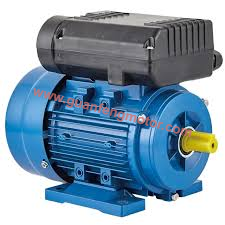
A single-phase induction motor at rest produces no net torque because its pulsating magnetic field resolves into two rotating fields of equal strength turning in opposite directions. The rotor sits in equilibrium, pushed equally both ways, and remains stationary until something tips the balance. A Single-Phase Capacitor Start Induction Motor solves this problem by adding an auxiliary winding and a capacitor that together create a rotating field strong enough to start the load. Guanfengmotor manufactures motors built around this principle, and the company's product range reflects years of practical application in pumps, compressors, and small machinery. So how does the capacitor actually produce the torque that sets a stationary rotor in motion?
The answer lies in phase displacement. The main winding and the auxiliary winding sit in the stator separated by a physical angle. When alternating current flows through the main winding alone, it creates a field that pulses along a fixed axis rather than rotating. Adding a capacitor in series with the auxiliary winding shifts the current in that winding forward in time relative to the main winding current. The two windings then carry currents that reach their peaks at different moments, and because the windings are also displaced in space, the combined effect is a magnetic field that sweeps around the stator bore rather than pulsing in place. This sweeping field cuts the rotor bars, induces currents in them, and produces the torque that accelerates the rotor from rest.
The capacitor's role is specific and temporary. Its capacitance is chosen so that the phase difference between the two winding currents approaches the value that produces the strongest starting torque. Once the rotor reaches a speed where the main winding alone can sustain rotation, the auxiliary winding and its capacitor are no longer needed. A centrifugal switch mounted on the rotor shaft opens as speed rises, disconnecting the starting circuit. The motor then runs on the main winding alone, with the capacitor and auxiliary winding resting idle until the next start.
This design produces a characteristic performance profile. Starting torque is high relative to running torque, which suits loads that resist initial movement, such as compressors and pumps that must overcome static friction and fluid pressure. The starting current draw is also substantial, a trade-off that comes with the strong starting field. Running performance is smooth and quiet once the switch has opened, and efficiency depends on the main winding design rather than the starting circuit. A motor that has been properly matched to its load will spend most of its working life in this running state, so the main winding and the rotor design carry the long-term burden while the starting circuit sits dormant.
Practical selection decisions follow from these characteristics. A load that starts easily, such as a small fan, may not justify the capacitor start configuration at all, while a load that begins under pressure or against a mechanical stop benefits from the high starting torque this design provides. Duty cycle matters as well, since frequent starts place repeated demands on the capacitor and the centrifugal switch, and a motor sized for continuous running may not suit an application that stops and restarts throughout the day. Matching the motor to the load curve rather than to a single horsepower figure avoids the common mistake of oversizing a unit that then runs below its efficient range.
Guanfengmotor's single-phase asynchronous motor line applies this starting principle across a range of output ratings suited to agricultural and light industrial equipment, and readers planning a motor selection can review the single-phase asynchronous motor range at https://www.guanfengmotor.com before matching a frame size to their application. A single-phase capacitor start induction motor turns because two windings, displaced in space and driven out of phase in time, together mimic the rotating field that a three-phase supply provides naturally, and the centrifugal switch retires the starting circuit once its work is done. Buyers who understand that sequence can judge whether a given motor suits their pump, compressor, or workshop machine, and a supplier that explains the principle clearly is one worth keeping in the conversation.